Résumé PubMed complet
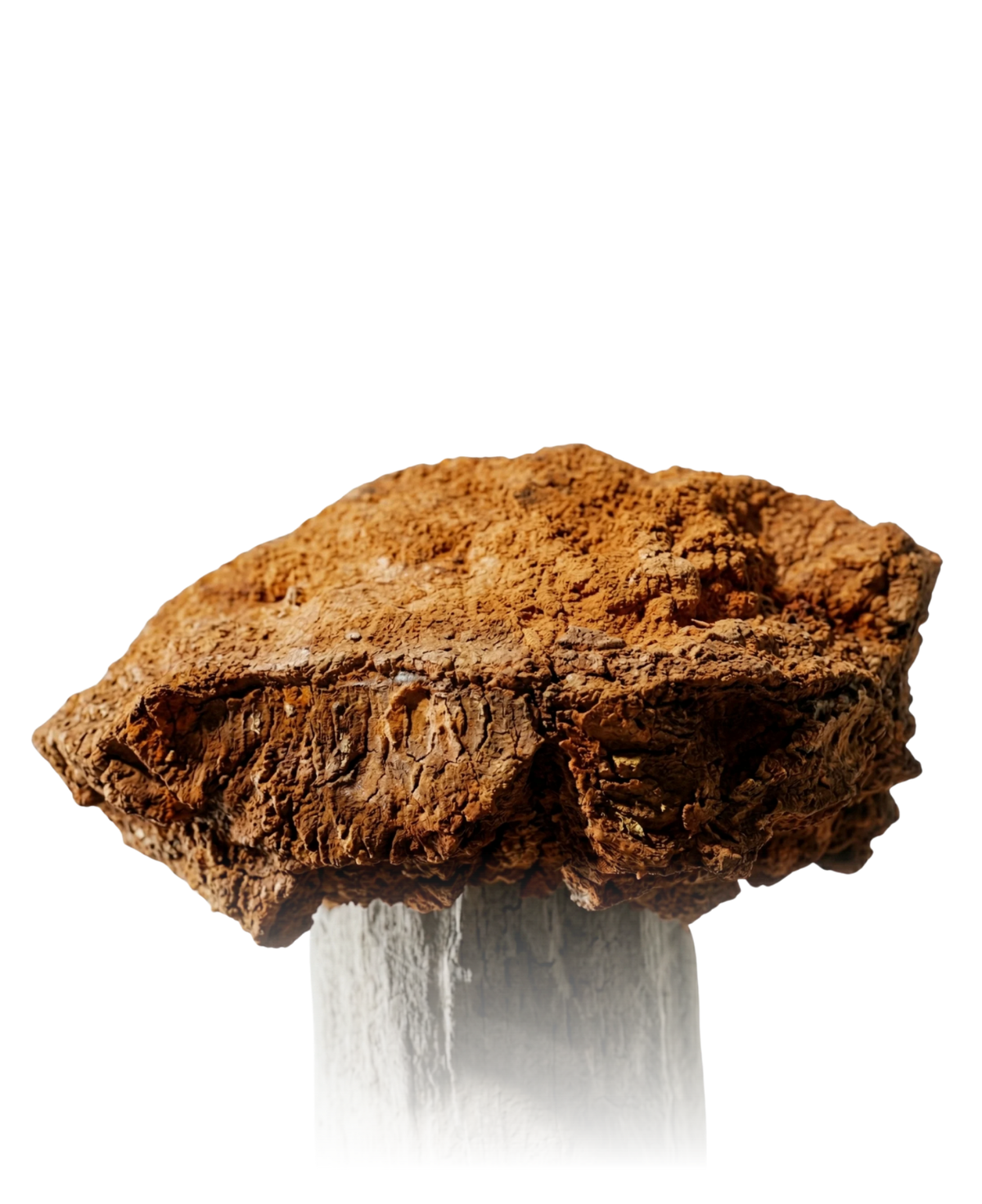
Inonotus obliquus is a medicinal fungus growing on birch bark. A neutral polysaccharide (IOP-W, Mw = 8.222 kDa) was isolated from its crude polysaccharides via sequential DEAE DE-52 cellulose column and Sephadex G-200 gel filtration column chromatography. IOP-W, composed primarily of galactose, glucose, and mannose, was structurally characterized by UV-Vis, FT-IR, GC-MS, and NMR as a glucan containing →4)-α-D-Glcp-(1→, →6)-β-D-Glcp-(1→, →3)-β-D-Glcp-(1→, →4,6)-α-D-Glcp-(1→, terminal α-D-Glcp, and β-D-Glcp reducing end. AFM confirmed its aggregated spherical morphology. IOP-W exerted antitumor activity against MIA PaCa-2 cells by modulating apoptosis and migration. Metabolomics revealed effects on amino acids, alkaloids, lipids, and nucleotides involving 20 pathways, while transcriptomic KEGG analysis showed regulation of MAPK, TNF, and p53 signaling. In vivo investigations employing small animal MRI technology have validated that tumor growth is significantly suppressed in animal models, accompanied by elevated spleen index and improved physiological parameters. Western blotting and immunohistochemistry revealed altered expression of Parp-1, p53, Bax/Bcl-2, p-ERK1/2, p-JNK1, NF-κB, vimentin, and MMP-9. These findings indicate that IOP-W inhibits pancreatic cancer via the p53/MAPK pathway, highlighting its potential as a fungal polysaccharide-based therapeutic candidate.
Résumé dans la langue de publication · Anglais
Questions et réponses
- Quel type d’étude est-ce ?
- Cette publication est classée comme étude préclinique in vitro à partir de son indexation et de son résumé PubMed.
- L’étude apporte-t-elle des données chez l’humain ?
- Non. Le résumé PubMed ne décrit pas un essai mené chez l’humain. Les résultats restent précliniques.
- Cette publication teste-t-elle un produit SporeLife ?
- Non. Elle porte sur Chaga ou sur l’un de ses composés ou préparations. La formulation, la dose et les contrôles peuvent différer de ceux d’un produit SporeLife.
- Que peut-on en conclure ?
- Cette étude est menée sur des cellules ou en laboratoire. Elle décrit un signal biologique, pas un bénéfice démontré chez l’humain.
Source
Auteurs : Liu X, Zhu G, Wang L, Feng L, Jin X, Zhao J, Yang H, Li G, et al.
Revue : International journal of biological macromolecules
Publication : 2026-09-25 · PMID 42790566 · DOI 10.1016/j.ijbiomac.2026.154618
Consulter la publication sur PubMed ↗