




Base de données

La science des champignons

Nous ne nous basons pas sur des croyances, mais sur la science. Découvrez les études publiées sur les champignons adaptogènes qui composent nos produits.

40
Études cliniques référencées
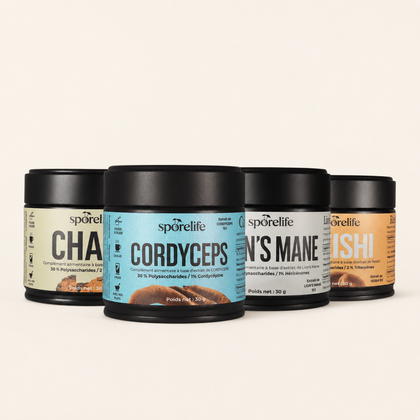
Hericium erinaceus Lion's ManeCordyceps sinensis CordycepsGanoderma lucidum ReishiInonotus obliquus Chaga Hericium erinaceus Lion's ManeCordyceps sinensis CordycepsGanoderma lucidum ReishiInonotus obliquus Chaga
01

Lion's Mane

Hericium erinaceus
02

Cordyceps

Cordyceps sinensis
03

Reishi

Ganoderma lucidum
04

Chaga

Inonotus obliquus

Nouvelles publications

Cordyceps Étude préclinique animale

Metabolic effects of Cordyceps militaris ethanol extract and cordycepin in mice with type 2 diabetes and hyperlipidaemia: gut microbial and bile acid-related changes.

Food & function · 2026-09-04 · PMID 42695401

Résumé complet et questions

Résumé PubMed complet

Cordyceps militaris is an edible medicinal fungus with potential metabolic benefits, but its effects on type 2 diabetes mellitus accompanied by hyperlipidaemia (T2DM-HLP) remain incompletely understood. This study evaluated the effects of orally administered C. militaris ethanol extract (EAE; 2.0 g kg-1) and cordycepin (50 or 100 mg kg-1) in a T2DM-HLP mouse model over 6 weeks. Metabolic indices, serum transaminases, colon and liver histology, gut bacterial and fungal communities, serum metabolites, and FXR/TGR5-related molecular markers were assessed. Compared with the model group, EAE and 50 mg kg-1 cordycepin reduced serum lipid and transaminase levels to varying degrees and were associated with downward shifts in fasting blood glucose and oral glucose tolerance test curves. Histological alterations in the colon and liver were also less apparent in these two groups. Faecal 16S rDNA and ITS sequencing showed changes in the bacterial and fungal community structure, while untargeted serum metabolomics identified distinct metabolic profiles involving bile acids, fatty acids, amino acids, nucleotides, and redox-related metabolites. Enrichment analyses implicated bile secretion, primary bile acid biosynthesis, cholesterol metabolism, cAMP signalling, and amino acid metabolism. These changes were accompanied by increased colonic TGR5 and hepatic FXR immunoreactivity, increased hepatic Fxr, Nr0b2, and Ppara expression, and reduced Cyp7a1 expression. Responses to 100 mg kg-1 cordycepin were less consistent, indicating no simple dose-dependent relationship under the present conditions. Overall, EAE and cordycepin were associated with improved metabolic status and coordinated changes in the gut microbial composition, serum metabolism, and bile acid-related molecular readouts.

Résumé dans la langue de publication · Anglais

Questions et réponses

Quel type d’étude est-ce ?
Cette publication est classée comme étude préclinique animale à partir de son indexation et de son résumé PubMed.
L’étude apporte-t-elle des données chez l’humain ?
Non. Le résumé PubMed ne décrit pas un essai mené chez l’humain. Les résultats restent précliniques.
Cette publication teste-t-elle un produit SporeLife ?
Non. Elle porte sur Cordyceps ou sur l’un de ses composés ou préparations. La formulation, la dose et les contrôles peuvent différer de ceux d’un produit SporeLife.
Que peut-on en conclure ?
Cette étude porte sur un modèle animal. Elle aide à explorer un mécanisme, mais ne permet pas de conclure à un effet chez l’humain.

Source

Auteurs : Shi H, Meng Y, Zhang G, Ling J
Revue : Food & function
Publication : 2026-09-04 · PMID 42695401 · DOI 10.1039/d6fo02540d

Consulter la publication sur PubMed
Cordyceps Étude de recherche

Rapid Identification of Multiple Types of Adulterated Ophiocordyceps sinensis by SEM-EDS Based on Micromorphology and Elemental Analysis.

Microscopy research and technique · 2026-09-02 · PMID 42683766

Résumé complet et questions

Résumé PubMed complet

As a rare and precious traditional Chinese medicine (TCM), Ophiocordyceps sinensis (O. sinensis) is plagued by various adulterants in the market due to factors such as resource scarcity, which seriously affects medication safety and clinical efficacy. Existing identification methods generally have problems including strong subjectivity, high sample destructiveness, long detection cycle, and complex operation, and it is difficult to identify different types of adulterants using the same method. Innovatively, this study adopted scanning electron microscopy-energy dispersive x-ray spectroscopy (SEM-EDS) technology to establish a rapid, accurate, and widely applicable method for identifying adulterated O. sinensis. Authentic O. sinensis samples from major producing areas such as Xizang, Qinghai, Sichuan, and Gansu, as well as different types of adulterated samples, were collected. Using SEM-EDS technology, combined with micromorphology and elemental composition, the differences between authentic and adulterated samples were systematically revealed through indicators including morphological differences, mass fraction of characteristic elements, and surface area coverage (SAC) of characteristic elements in surface scanning. This study confirmed that SEM-EDS technology could simultaneously obtain the micromorphological and elemental distribution information of samples, realizing rapid and accurate identification of multiple types of adulterated O. sinensis. The proposed method provided new technical support for the quality control and market supervision of O. sinensis, which could be extended to the adulteration inspection of other precious and delicate TCM.

Résumé dans la langue de publication · Anglais

Questions et réponses

Quel type d’étude est-ce ?
Cette publication est classée comme étude de recherche à partir de son indexation et de son résumé PubMed.
L’étude apporte-t-elle des données chez l’humain ?
Non. Le résumé PubMed ne décrit pas un essai mené chez l’humain. Les résultats restent précliniques.
Cette publication teste-t-elle un produit SporeLife ?
Non. Elle porte sur Cordyceps ou sur l’un de ses composés ou préparations. La formulation, la dose et les contrôles peuvent différer de ceux d’un produit SporeLife.
Que peut-on en conclure ?
La portée de cette publication dépend du modèle, de la préparation, de la dose et des critères étudiés. Le résumé PubMed permet d’en vérifier le contexte exact.

Source

Auteurs : Liu YW, Nie LX, Wu Y, Qian ZM, Guo K, Li Z, Zhang Y, Yu JD, et al.
Revue : Microscopy research and technique
Publication : 2026-09-02 · PMID 42683766 · DOI 10.1002/jemt.70171

Consulter la publication sur PubMed
Cordyceps Étude préclinique in vitro

Utilize Metabolomics Molecular Networking to Guide the Discovery of Chemical Entities from Cordyceps militaris Against Blue Light Hazards.

Journal of natural products · 2026-08-28 · PMID 42424532

Résumé complet et questions

Résumé PubMed complet

Increasing exposure to blue light has raised concern about retinal injury, particularly in retinal pigment epithelial (RPE) cells. N-retinylidene-N-retinylethanolamine (A2E), a photosensitive fluorophore associated with age-related macular degeneration, is an important mediator of this process. In this study, feature-based molecular networking guided the identification of cordylutenes A-J (1-10), a new molecular family of blue light-protective fungal pigments from Cordyceps militaris. These metabolites possess a previously unreported symmetric all-E C20 polyene dicarbonyl skeleton with carotenoid-like UV absorption. They were characterized at the molecular-family level by shared UV features and diagnostic, internally consistent MS2 fragmentation patterns. Cordylutenes A (1) and B (2) were isolated as representative members for structural characterization. In an A2E-mediated blue-light injury model in ARPE-19 cells, the cordylutene complex (CCL, 1 μg/mL) and cordylutene A (1, 0.1 μg/mL) improved cell viability to 84.78 ± 4.02% and 92.14 ± 1.88%, respectively, and reduced intracellular oxidative stress to 63.67 ± 3.33% and 43.89 ± 9.59%, respectively. These findings identify cordylutenes as a new family of fungal pigments with protective effects in an A2E-mediated photo-oxidative retinal cell injury model.

Résumé dans la langue de publication · Anglais

Questions et réponses

Quel type d’étude est-ce ?
Cette publication est classée comme étude préclinique in vitro à partir de son indexation et de son résumé PubMed.
L’étude apporte-t-elle des données chez l’humain ?
Non. Le résumé PubMed ne décrit pas un essai mené chez l’humain. Les résultats restent précliniques.
Cette publication teste-t-elle un produit SporeLife ?
Non. Elle porte sur Cordyceps ou sur l’un de ses composés ou préparations. La formulation, la dose et les contrôles peuvent différer de ceux d’un produit SporeLife.
Que peut-on en conclure ?
Cette étude est menée sur des cellules ou en laboratoire. Elle décrit un signal biologique, pas un bénéfice démontré chez l’humain.

Source

Auteurs : Wu HC, Gu A, Chang YL, Lu CK, Lee YC, Yu PW, Lee TH
Revue : Journal of natural products
Publication : 2026-08-28 · PMID 42424532 · DOI 10.1021/acs.jnatprod.6c00427

Consulter la publication sur PubMed
Reishi Étude préclinique in vitro

[Retracted] Restoration of the tumor‑suppressor function to mutant p53 by Ganoderma lucidum polysaccharides in colorectal cancer cells.

Oncology reports · 2026-08-21 · PMID 42627062

Résumé complet et questions

Résumé PubMed complet

Following the publication of the above paper, it was drawn to the Editor's attention by a concerned reader that western blots portraying the protein p53 in Figs. 1C and 4C had previously appeared as p53 bands in an article published in 2010 in the journal PLoS One that featured the author Fei Wang in common, although the exprimental conditions were reported to be different in the previous paper. In addition, regarding the flow cytometric plots shown in Fig. 1D on p. 596, the 'HCT116 P53^' plots for the NTC (upper row) and 5‑FU (lower row) experiments appeared to show similar groupings of dots in specific areas of the quadrants, which would not have been anticipated if these experiments had been performed discretely under different experimental conditions, suggesting a fundamental flaw either in the way in which these experiments were performed or in how the results were outputted. Given that these issues have come to light, the Editor of Oncology Reports has decided that this paper should be retracted from the Journal on account of a lack of confidence in the presented data. After contacting the authors, they accepted the decision to retract the paper. The Editor apologizes to the readership for any inconvenience caused. [Oncology Reports 37: 594‑600, 2017; DOI: 10.3892/or.2016.5246].

Résumé dans la langue de publication · Anglais

Questions et réponses

Quel type d’étude est-ce ?
Cette publication est classée comme étude préclinique in vitro à partir de son indexation et de son résumé PubMed.
L’étude apporte-t-elle des données chez l’humain ?
Non. Le résumé PubMed ne décrit pas un essai mené chez l’humain. Les résultats restent précliniques.
Cette publication teste-t-elle un produit SporeLife ?
Non. Elle porte sur Reishi ou sur l’un de ses composés ou préparations. La formulation, la dose et les contrôles peuvent différer de ceux d’un produit SporeLife.
Que peut-on en conclure ?
Cette étude est menée sur des cellules ou en laboratoire. Elle décrit un signal biologique, pas un bénéfice démontré chez l’humain.

Source

Auteurs : Jiang D, Wang L, Zhao T, Zhang Z, Zhang R, Jin J, Cai Y, Wang F
Revue : Oncology reports
Publication : 2026-08-21 · PMID 42627062 · DOI 10.3892/or.2026.9181

Consulter la publication sur PubMed
Cordyceps Étude préclinique in vitro

Multi-Target Neuroprotective Effects of Cordycepin and Adenosine from Cordyceps militaris Against Amyloid-β-Induced Neurotoxicity.

Biomedicines · 2026-08-20 · PMID 42652243

Résumé complet et questions

Résumé PubMed complet

Background:Cordyceps militaris (C. militaris) is a medicinal mushroom recognized for its diverse pharmacological activities, largely attributed to its principal bioactive nucleosides, cordycepin and adenosine. Although accumulating evidence supports their neuroprotective potential, the molecular mechanisms underlying their effects against Alzheimer's disease (AD) remain incompletely understood. This study investigated the neuroprotective effects of cordycepin and adenosine against amyloid-β (Aβ42)-induced neurotoxicity and explored their potential molecular mechanisms using integrated experimental and computational approaches. Methods: SH-SY5Y neuroblastoma cells were pretreated with cordycepin (COR), adenosine (ADE), or donepezil (DNPZ) prior to Aβ42 exposure, and cell viability was assessed using the MTT assay. Drug-likeness and absorption, distribution, metabolism, excretion, and toxicity (ADMET) properties were evaluated in silico, followed by network pharmacology to identify potential therapeutic targets and enriched biological pathways. Molecular docking and molecular dynamics simulations were performed to elucidate the interactions of the compounds with selected Alzheimer's disease-related proteins. Results: COR and ADE significantly attenuated Aβ42-induced cytotoxicity and improved SH-SY5Y cell viability. Network pharmacology identified 84 shared molecular targets, including 9 AD-associated genes. Protein-protein interaction analysis revealed hub genes involved in signal transduction, epigenetic regulation, and purine metabolism, while Gene Ontology and KEGG enrichment analyses highlighted pathways associated with neuroactive ligand-receptor interaction, calcium signaling, and inflammatory regulation. ADMET analysis predicted favorable pharmacokinetic properties for both compounds, although cordycepin was predicted to be AMES-positive. Molecular docking and molecular dynamics simulations demonstrated stable interactions of COR and ADE with liver X receptors (LXRα and LXRβ), whereas donepezil exhibited stronger binding affinity toward β-secretase (BACE1). Conclusions: COR and ADE exert neuroprotective effects through coordinated modulation of multiple AD-related signaling pathways rather than a single molecular target. These findings provide mechanistic insights into the neuroprotective activities of C. militaris-derived nucleosides and support further investigation of their potential as multi-target therapeutic candidates for AD and other neurodegenerative disorders.

Résumé dans la langue de publication · Anglais

Questions et réponses

Quel type d’étude est-ce ?
Cette publication est classée comme étude préclinique in vitro à partir de son indexation et de son résumé PubMed.
L’étude apporte-t-elle des données chez l’humain ?
Non. Le résumé PubMed ne décrit pas un essai mené chez l’humain. Les résultats restent précliniques.
Cette publication teste-t-elle un produit SporeLife ?
Non. Elle porte sur Cordyceps ou sur l’un de ses composés ou préparations. La formulation, la dose et les contrôles peuvent différer de ceux d’un produit SporeLife.
Que peut-on en conclure ?
Cette étude est menée sur des cellules ou en laboratoire. Elle décrit un signal biologique, pas un bénéfice démontré chez l’humain.

Source

Auteurs : Thoe ES, Tan HD, Fauzi A, Chamyuang S, Tang YQ, Chia AYY
Revue : Biomedicines
Publication : 2026-08-20 · PMID 42652243 · DOI 10.3390/biomedicines14081862

Consulter la publication sur PubMed
Cordyceps Revue de littérature

Cordyceps sinensis and Sonodynamic Therapy in Non-Small Cell Lung Cancer: Pharmacological Basis, Therapeutic Potential, and Future Directions.

International journal of nanomedicine · 2026-08-20 · PMID 42639578

Résumé complet et questions

Résumé PubMed complet

Non-small cell lung cancer (NSCLC) accounts for the highest cancer-related mortality worldwide. Chemotherapy, the backbone of treatment for advanced disease, is constrained by drug resistance and off-target toxicity. Extracts of Cordyceps sinensis (CORS), a medicinal fungus, contain cordycepin, cordyceps polysaccharides (CSP), and various sterols that suppress NSCLC cell proliferation and induce apoptosis in preclinical models. Translating these findings to the clinic, however, faces three problems. First, the active compounds are poorly absorbed orally. Second, water-based decoction inevitably co-extracts inorganic arsenic at roughly four times the Chinese Pharmacopoeia limit. Third, CORS components lack tumor-targeting capability. We propose combining purified cordycepin and CSP with magnetic PLGA-PEG nanoparticles loaded with superparamagnetic iron oxide (SPIO), using an external magnet to concentrate the nanoparticles at the tumor and focused ultrasound to do two things at once: mechanically disrupt the polymer matrix to release the drug payload, and where a sonosensitizer is co-loaded, generate cytotoxic reactive oxygen species (ROS). We also address a practical hurdle: ultrasound attenuates massively in aerated lung. We review workarounds including endobronchial ultrasound, lower frequencies, and microbubble-enhanced cavitation. Compared with immune checkpoint inhibitors, which require PD-L1 positivity and carry a risk of serious immune-related adverse events, our platform operates through multi-targeted mechanisms independent of a single biomarker. Sonodynamic ROS may also induce immunogenic cell death, suggesting potential synergy with immunotherapy.In our view, this nano-enabled approach to traditional Chinese medicine represents one way to bring the pharmacology of CORS into the era of evidence-based oncology.

Résumé dans la langue de publication · Anglais

Questions et réponses

Quel type d’étude est-ce ?
Cette publication est classée comme revue de littérature à partir de son indexation et de son résumé PubMed.
L’étude apporte-t-elle des données chez l’humain ?
Pas directement. Il s’agit d’une synthèse de travaux qui peuvent inclure des données humaines et précliniques. Il faut vérifier les études incluses avant de tirer une conclusion clinique.
Cette publication teste-t-elle un produit SporeLife ?
Non. Elle porte sur Cordyceps ou sur l’un de ses composés ou préparations. La formulation, la dose et les contrôles peuvent différer de ceux d’un produit SporeLife.
Que peut-on en conclure ?
Cette revue rassemble des travaux qui peuvent utiliser des modèles, des doses et des préparations différents. Elle ne remplace pas un essai clinique sur un produit précis.

Source

Auteurs : Zhang Z, Huang C, Ling X, Gan X, Zheng Q, Zhang B, Li J, Wang L
Revue : International journal of nanomedicine
Publication : 2026-08-20 · PMID 42639578 · DOI 10.2147/IJN.S632002

Consulter la publication sur PubMed
Reishi Étude préclinique animale

Isolation and Anti-Melanogenic Activity of Polycarpol from Ganoderma lucidum Mycelia: Expanding the Functional Potential of Cultured Mycelial Biomass.

Journal of fungi (Basel, Switzerland) · 2026-08-19 · PMID 42646151

Résumé complet et questions

Résumé PubMed complet

Ganoderma lucidum is a medicinal mushroom widely recognized as a source of bioactive metabolites, particularly triterpenoids. Although most studies have focused on fruiting bodies and spores, the potential of cultured mycelial biomass as a source of functional secondary metabolites remains less explored. In this study, we isolated and characterized polycarpol from the mycelia of G. lucidum and evaluated its anti-melanogenic activity in B16F10 murine melanoma cells. Dried mycelia obtained after liquid culture were extracted with 70% ethanol, partitioned with ethyl acetate, and purified by repeated chromatographic separation. The isolated compound was identified as polycarpol by LC-ESI-MS, HR-MS/MS, and NMR spectroscopy, together with comparison with previously reported spectroscopic data. The anti-melanogenic activity of polycarpol was evaluated in α-MSH-stimulated B16F10 murine melanoma cells, a commonly used cellular model of melanogenesis. Polycarpol reduced α-melanocyte-stimulating hormone-induced cellular tyrosinase activity and melanin production at concentrations that did not markedly affect cell viability. Notably, 2 μg/mL (4.54 μM) polycarpol showed a melanin-inhibitory effect comparable to that of arbutin. Western blot analysis showed that polycarpol decreased the expression of microphthalmia-associated transcription factor, tyrosinase, and tyrosinase-related protein-1. In addition, polycarpol suppressed CREB phosphorylation and modulated the MAPK signaling pathways. These findings suggest that polycarpol inhibits melanogenesis through regulation of MITF-associated melanogenic signaling. Overall, this study demonstrates that cultured G. lucidum mycelia can produce anti-melanogenic triterpenoids and highlights cultured mycelial biomass as a controllable fungal material for exploring anti-melanogenic triterpenoids, although further optimization is required to improve production efficiency.

Résumé dans la langue de publication · Anglais

Questions et réponses

Quel type d’étude est-ce ?
Cette publication est classée comme étude préclinique animale à partir de son indexation et de son résumé PubMed.
L’étude apporte-t-elle des données chez l’humain ?
Non. Le résumé PubMed ne décrit pas un essai mené chez l’humain. Les résultats restent précliniques.
Cette publication teste-t-elle un produit SporeLife ?
Non. Elle porte sur Reishi ou sur l’un de ses composés ou préparations. La formulation, la dose et les contrôles peuvent différer de ceux d’un produit SporeLife.
Que peut-on en conclure ?
Cette étude porte sur un modèle animal. Elle aide à explorer un mécanisme, mais ne permet pas de conclure à un effet chez l’humain.

Source

Auteurs : Park CH, Lee SC, Kang RW, Park YJ
Revue : Journal of fungi (Basel, Switzerland)
Publication : 2026-08-19 · PMID 42646151 · DOI 10.3390/jof12080625

Consulter la publication sur PubMed
Lion’s Mane Étude de recherche

Integrated analysis uncovers exogenous induction and molecular regulation of erinacine A accumulation in Hericium erinaceus.

Microbiological research · 2026-08-18 · PMID 42632391

Résumé complet et questions

Résumé PubMed complet

Erinacine A, a cyathane-type diterpenoid mainly from Hericium erinaceus mycelia, exhibits prominent neurotrophic and neuroprotective activities, making it a promising candidate for managing neurodegenerative diseases. However, its low abundance and unclear genetic regulatory mechanisms hinder its application as a nutraceutical. This study aimed to decipher its regulatory mechanisms and enhance production. Four exogenous inducers were screened, with salicylic acid (SA) and ergosterol (ERG) significantly increasing erinacine A content by 62.21% and 146.70% at 20 days, respectively. Transcriptome and WGCNA of inducer-treated sample identified darkorange and magenta modules associated with erinacine A biosynthesis, with the eri gene cluster enriched in the darkorange module and eriG and eriF as hub genes. Forward genetic analysis via QTL mapping of the HeD127 dikaryon population revealed significant phenotypic variation in erinacine A content (0.341-13.085 mg/g) and identified two loci (erA-1 and erA-2) explaining 18.63% of phenotypic variation. Integrating these forward and reverse genetic analyses revealed that salicylic acid and ergosterol synergistically regulate core carbon metabolic pathways to augment acetyl-CoA supply for the mevalonate pathway, suppressed competitive metabolism, enhanced diterpene skeleton construction and structural modification. These results deepen our understanding of the genetic and molecular basis governing accumulation of erinacine A, and facilitate its application in neuroprotective pharmaceuticals.

Résumé dans la langue de publication · Anglais

Questions et réponses

Quel type d’étude est-ce ?
Cette publication est classée comme étude de recherche à partir de son indexation et de son résumé PubMed.
L’étude apporte-t-elle des données chez l’humain ?
Non. Le résumé PubMed ne décrit pas un essai mené chez l’humain. Les résultats restent précliniques.
Cette publication teste-t-elle un produit SporeLife ?
Non. Elle porte sur Lion’s Mane ou sur l’un de ses composés ou préparations. La formulation, la dose et les contrôles peuvent différer de ceux d’un produit SporeLife.
Que peut-on en conclure ?
La portée de cette publication dépend du modèle, de la préparation, de la dose et des critères étudiés. Le résumé PubMed permet d’en vérifier le contexte exact.

Source

Auteurs : Li Y, Hu X, Tan Z, Huang M, Wu Q, Xie L, Xia Z, Song X, et al.
Revue : Microbiological research
Publication : 2026-08-18 · PMID 42632391 · DOI 10.1016/j.micres.2026.128690

Consulter la publication sur PubMed
Reishi Étude de recherche

Development and Stability Evaluation of Oleogel-in-Water Emulsions Using Whey Protein Isolate-Ferulic Acid Nanoparticles for Ganoderma Lucidum Spore Oil Encapsulation.

Gels (Basel, Switzerland) · 2026-08-17 · PMID 42644978

Résumé complet et questions

Résumé PubMed complet

This work evaluated how ferulic acid (FA) impacted the conformational properties of whey protein isolate (WPI) and altered the environmental tolerance of oleogel/water (Og/W) emulsions formulated with Ganoderma lucidum spore oil (GLSO). Molecular dynamics simulation analyses revealed that FA interacted with α-lactalbumin via hydrogen bonding and hydrophobic interactions, whereas it bound into the hydrophobic cavity of β-lactoglobulin through a "lock-and-key" mode driven primarily by hydrophobic forces. Fourier transform infrared spectroscopy analysis verified that such non-covalent forces triggered the dissociation and structural extension of WPI, which was manifested as a significant loss of α-helix and β-sheet architectures along with a corresponding rise in random coils. FA addition increased the positive charge, mean droplet size, interfacial contact angle and antioxidant stability of WPI-FA nanoparticles when the WPI-to-FA ratio exceeded 1:2 (i.e., WPI was in excess relative to FA). The GLSO-based Og/W emulsions exhibited a weak gel structure with predominantly elastic characteristics. Furthermore, WPI-FA nanoparticles fabricated at a 2:1 ratio minimized emulsion droplet size and imparted optimal stability to the Og/W emulsions, demonstrating superior freeze-thaw and salt resistance, alongside suppressed GLSO flavor release. This work provides critical insights into tailoring protein-polyphenol interactions to stabilize GLSO-based Og/W emulsion delivery systems for food applications.

Résumé dans la langue de publication · Anglais

Questions et réponses

Quel type d’étude est-ce ?
Cette publication est classée comme étude de recherche à partir de son indexation et de son résumé PubMed.
L’étude apporte-t-elle des données chez l’humain ?
Non. Le résumé PubMed ne décrit pas un essai mené chez l’humain. Les résultats restent précliniques.
Cette publication teste-t-elle un produit SporeLife ?
Non. Elle porte sur Reishi ou sur l’un de ses composés ou préparations. La formulation, la dose et les contrôles peuvent différer de ceux d’un produit SporeLife.
Que peut-on en conclure ?
La portée de cette publication dépend du modèle, de la préparation, de la dose et des critères étudiés. Le résumé PubMed permet d’en vérifier le contexte exact.

Source

Auteurs : Yan W, Bao Y, Wang H, Xu S, He C, Wang Z, Jiang J
Revue : Gels (Basel, Switzerland)
Publication : 2026-08-17 · PMID 42644978 · DOI 10.3390/gels12080735

Consulter la publication sur PubMed
Reishi Étude préclinique in vitro

Network pharmacology-guided identification and validation of ganoderic acids A and D from Ganoderma lucidum against esophageal squamous cell carcinoma.

Biochemical and biophysical research communications · 2026-08-14 · PMID 42628332

Résumé complet et questions

Résumé PubMed complet

Esophageal squamous cell carcinoma (ESCC) is a highly aggressive malignancy with unsatisfactory prognosis and ongoing therapeutic challenges. Ganoderma lucidum has been widely investigated for anticancer activity, but the specific monomeric ganoderic acids that may contribute to anti-ESCC effects and their potential target context remain insufficiently characterized. Compounds and targets were prioritized through network pharmacology, ADME evaluation, disease-target integration and TCGA-based clinical bioinformatics. Molecular docking and 100-ns molecular dynamics (MD) simulations were used to evaluate putative ligand-target binding stability. The effects of ganoderic acid A (GA-A) and ganoderic acid D (GA-D) were assessed in ESCC and normal esophageal epithelial cells using image-based cell counting, EdU incorporation assays, flow cytometric cell-cycle and apoptosis analyses, and immunoblotting of mTORC1-associated readouts. Nine compounds and 191 drug-disease intersection targets were identified. GA-A and GA-D were prioritized as core ganoderic acid monomers based on network connectivity, pharmacological relevance and experimental feasibility. Enrichment analysis implicated cancer-related signaling, including PI3K-Akt/mTOR-associated pathways. Docking and MD simulations supported stable putative interactions between GA-A/GA-D and mTOR. In vitro, both compounds reduced cell number and EdU incorporation in ECSS cells, and induced G0/G1 accumulation and apoptosis, with GA-D showing stronger anti-proliferative activity than GA-A under the tested conditions. HEEC cells were less sensitive under the tested conditions. GA-A and GA-D also reduced phosphorylated S6 and 4EBP1 levels. This study identifies GA-A and GA-D, particularly GA-D, as candidate anti-proliferative monomers from G. lucidum against ESCC. The findings provide a focused, experimentally supported basis for further mechanistic evaluation of ganoderic acids, including target engagement assays and drug-treated transcriptomic profiling.

Résumé dans la langue de publication · Anglais

Questions et réponses

Quel type d’étude est-ce ?
Cette publication est classée comme étude préclinique in vitro à partir de son indexation et de son résumé PubMed.
L’étude apporte-t-elle des données chez l’humain ?
Non. Le résumé PubMed ne décrit pas un essai mené chez l’humain. Les résultats restent précliniques.
Cette publication teste-t-elle un produit SporeLife ?
Non. Elle porte sur Reishi ou sur l’un de ses composés ou préparations. La formulation, la dose et les contrôles peuvent différer de ceux d’un produit SporeLife.
Que peut-on en conclure ?
Cette étude est menée sur des cellules ou en laboratoire. Elle décrit un signal biologique, pas un bénéfice démontré chez l’humain.

Source

Auteurs : Wang Y, Xie Y, Meng S, Huang J, Hu H, Wu M, Chen Q, Wu P, et al.
Revue : Biochemical and biophysical research communications
Publication : 2026-08-14 · PMID 42628332 · DOI 10.1016/j.bbrc.2026.154445

Consulter la publication sur PubMed
Reishi Étude préclinique in vitro

Phytochemical characterization, pharmacological activities, and in silico analysis of the methanolic extract of reishi mushroom (Ganodermalucidum).

Journal of ethnopharmacology · 2026-08-13 · PMID 42595068

Résumé complet et questions

Résumé PubMed complet

Medicinal plants are widely used in traditional medicine to treat various diseases, especially in communities with limited access to conventional healthcare. Ganoderma lucidum (Reishi mushroom) is a medicinal fungus that has been widely used in traditional medicine systems, particularly in East Asia, for the prevention and treatment of inflammatory disorders, gastrointestinal ailments, and general health promotion due to its rich content of bioactive compounds, with antioxidant and anti-inflammatory properties. Its long-standing ethnomedicinal use as a tonic and therapeutic agent supports its relevance as a natural source of bioactive compounds with potential pharmacological benefits. This study aimed to investigate the phytochemical composition, pharmacological activities, toxicity profile, and in silico therapeutic potential of the methanolic extract of the fruiting body of G. lucidum (GLFME) with a particular focus on its antioxidant and anti-inflammatory effects. An integrated in vitro assay, in vivo models, and molecular docking analyses were employed to evaluate the pharmacological potential of GLFME. The samples were air-dried, ground into a fine powder, and extracted in methanol (1:20, w/v) for 10 days, followed by a filtration-evaporation cycle under low pressure to produce a crude methanol extract. A fraction of the extract was subjected to phytochemical profiling through UV densitometry, FTIR, and GC/MS analysis. Antioxidant activity was evaluated using DPPH and ferric reducing antioxidant power (FRAP) assays. Cytotoxicity and thrombolytic activity were assessed using brine shrimp lethality and clot lysis assays. Analgesic, anti-inflammatory, and antidiarrheal activities were evaluated in vivo using animal models. Acute toxicity studies were conducted to assess safety. Molecular docking was performed to determine the binding affinity of identified compounds toward human catalase (PDB ID: 1DGH), a key antioxidant enzyme belonging to the oxidoreductase class that plays a central role in cellular redox homeostasis. GLFME contained high levels of phenolics (215.63 ± 17 mg GAE g-1) and flavonoids (467.34 ± 35 QAE g-1). The extract showed strong antioxidant activity with a DPPH IC50 value of 0.969 ± 0.008 μg mL-1. Significant thrombolytic activity (p < 0.01) and mild cytotoxicity (LC50 = 13.15 ± 1.2 μg mL-1) were observed. Acute toxicity studies indicated an LD50 > 1600 mg kg-1. In vivo studies demonstrated significant analgesic, anti-inflammatory, and antidiarrheal effects. Docking results revealed strong binding affinities of GC-MS-identified compounds toward human catalase (PDB ID: 1DGH). These findings suggest that GLFME possesses significant antioxidant and anti-inflammatory pharmacological potential and may serve as a promising natural source for future nutraceutical and therapeutic development.

Résumé dans la langue de publication · Anglais

Questions et réponses

Quel type d’étude est-ce ?
Cette publication est classée comme étude préclinique in vitro à partir de son indexation et de son résumé PubMed.
L’étude apporte-t-elle des données chez l’humain ?
Non. Le résumé PubMed ne décrit pas un essai mené chez l’humain. Les résultats restent précliniques.
Cette publication teste-t-elle un produit SporeLife ?
Non. Elle porte sur Reishi ou sur l’un de ses composés ou préparations. La formulation, la dose et les contrôles peuvent différer de ceux d’un produit SporeLife.
Que peut-on en conclure ?
Cette étude est menée sur des cellules ou en laboratoire. Elle décrit un signal biologique, pas un bénéfice démontré chez l’humain.

Source

Auteurs : Akhter Nifa MS, Abdullah M, Islam M, Khatun S, Bhuiyan AA, Shanta MA, Islam MA, Sheikh MR, et al.
Revue : Journal of ethnopharmacology
Publication : 2026-08-13 · PMID 42595068 · DOI 10.1016/j.jep.2026.122298

Consulter la publication sur PubMed
Cordyceps Étude préclinique animale

Cordyceps militaris granules reduce EMT/ECM marker expression and alleviate pulmonary fibrosis.

Journal of ethnopharmacology · 2026-08-11 · PMID 42580541

Résumé complet et questions

Résumé PubMed complet

Idiopathic pulmonary fibrosis (IPF) is a chronic, progressive, irreversible interstitial lung disease that severely impairs patients' quality of life and overall survival, yet few therapeutic drugs are available for this disease. Cordyceps militaris (L.) Link. is an edible and medicinal fungus renowned for its lung- and kidney-nourishing properties. Decoctions containing C. militaris and other traditional Chinese medicines have been used clinically to treat elderly patients with IPF. Nevertheless, whether C. militaris or its derived products can suppress the progression of pulmonary fibrosis remains unclear. This study aimed to evaluate the effect of a granule formulation prepared from the aqueous extract of C. militaris (CC) on pulmonary fibrosis. An HPLC-UV method was used for the quantification of five major nucleosides in CC and its ethanol extract (CCE, with maltodextrin removed). Two pulmonary fibrosis cellular models were utilized to evaluate the bioactivity of CCE, including TGF-β1-stimulated BEAS-2B human bronchial epithelial cells and A549 human lung adenocarcinoma epithelial cells. A bleomycin-induced mouse model of pulmonary fibrosis was established to evaluate in vivo efficacy of CC. Western blot and RT-qPCR were performed to quantify the protein and mRNA expression levels of key biomarkers associated with epithelial-mesenchymal transition (EMT) and extracellular matrix (ECM) deposition in pulmonary fibrosis, including E-cadherin, N-cadherin, vimentin, α-SMA, fibronectin, collagen I and collagen III. Non-invasive whole-body plethysmography (WBP) was used to measure pulmonary function parameters in mice. The contents of uridine, guanosine, adenosine, cordycepin, and N6-(2-hydroxyethyl)adenosine were 0.84, 0.56, 0.93, 1.56 and 1.15 mg/g in CC and 4.49, 1.71, 3.96, 5.57 and 4.79 mg/g in CCE, respectively, with the total nucleoside content being 5.04 and 20.52 mg/g. CCE (200-800 μg/mL) dose-dependently inhibited the mRNA and protein expression of fibronectin, collagen I, and collagen III (ECM-related markers) in TGF-β1-stimulated BEAS-2B cells, whereas CCE upregulated E-cadherin mRNA and protein expression (EMT-related marker) in TGF-β1-treated A549 cells. In bleomycin-challenged mice, intragastric administration of CC at 600 mg/kg reduced lung hydroxyproline level, mitigated elevated enhanced pause (Penh), and markedly downregulated the protein expression of fibronectin, collagen I and collagen III. In vitro and in vivo studies indicated that CC and CCE alleviated pulmonary fibrosis, which associated with reduced EMT/ECM marker expression, in particular inhibiting overproduction of ECM components (fibronectin, collagen I, and collagen III). C. militaris granules represent a potential anti-fibrotic candidate that merits further preclinical investigation.

Résumé dans la langue de publication · Anglais

Questions et réponses

Quel type d’étude est-ce ?
Cette publication est classée comme étude préclinique animale à partir de son indexation et de son résumé PubMed.
L’étude apporte-t-elle des données chez l’humain ?
Non. Le résumé PubMed ne décrit pas un essai mené chez l’humain. Les résultats restent précliniques.
Cette publication teste-t-elle un produit SporeLife ?
Non. Elle porte sur Cordyceps ou sur l’un de ses composés ou préparations. La formulation, la dose et les contrôles peuvent différer de ceux d’un produit SporeLife.
Que peut-on en conclure ?
Cette étude porte sur un modèle animal. Elle aide à explorer un mécanisme, mais ne permet pas de conclure à un effet chez l’humain.

Source

Auteurs : Ji X, Chen K, Liu S, Jin M, Chen Y, Bai H, Feng M, Liu C, et al.
Revue : Journal of ethnopharmacology
Publication : 2026-08-11 · PMID 42580541 · DOI 10.1016/j.jep.2026.122295

Consulter la publication sur PubMed
Lion’s Mane Étude de recherche

Peripheral nerve regeneration and synergistic pharmacology using Hericium erinaceus, lithium, and vitamin B12: The triple neuromodulatory axis hypothesis.

International journal of clinical pharmacology and therapeutics · 2026-08-01 · PMID 41878942

Résumé complet et questions

Résumé PubMed complet

Peripheral nerve injuries (PNI) frequently result in incomplete functional recovery, creating a significant translational gap despite advances in surgical techniques. While Hericium erinaceus (H. erinaceus), lithium, and vitamin B12 have individually demonstrated promising neuromodulatory and neurotrophic properties - targeting axonal growth, myelination, and neuroprotection - no existing experimental model has investigated their combined synergistic potential. This lack of integrated approach represents a major barrier to developing effective multimodal therapies. We propose a "triple neuromodulatory axis" hypothesis: that the combined administration of H. erinaceus, lithium, and vitamin B12 will exert a synergistic effect on peripheral nerve regeneration. This synergy is mechanistically driven by the agents' convergence on three vital pathways: neurotrophic signaling (TrkA/ERK), glial modulation (GSK-3β/β-catenin), and metabolic/methylation support. The coordinated action of this axis is hypothesized to ensure simultaneous initiation of axonal growth, rapid Schwann cell proliferation, and sustained myelination. Translational rationale: The convergence of these mechanisms suggests that the triple axis, when tested in appropriate in vivo models of nerve injury, will yield superior functional outcomes (e.g., Sciatic Functional Index) and histological repair (e.g., myelin density and axon count) compared to standard treatments or mono-treatments. The triple neuromodulatory axis provides a testable translational framework for designing future multi-arm studies aimed at validating a novel, synergistic pharmacological strategy for enhancing neurorepair in diabetic and post-traumatic neuropathies.

Résumé dans la langue de publication · Anglais

Questions et réponses

Quel type d’étude est-ce ?
Cette publication est classée comme étude de recherche à partir de son indexation et de son résumé PubMed.
L’étude apporte-t-elle des données chez l’humain ?
Non. Le résumé PubMed ne décrit pas un essai mené chez l’humain. Les résultats restent précliniques.
Cette publication teste-t-elle un produit SporeLife ?
Non. Elle porte sur Lion’s Mane ou sur l’un de ses composés ou préparations. La formulation, la dose et les contrôles peuvent différer de ceux d’un produit SporeLife.
Que peut-on en conclure ?
La portée de cette publication dépend du modèle, de la préparation, de la dose et des critères étudiés. Le résumé PubMed permet d’en vérifier le contexte exact.

Source

Auteurs : Radanović D, Rasulić L, Savić A, Matić S, Micić D, Petrović P, Divac N
Revue : International journal of clinical pharmacology and therapeutics
Publication : 2026-08-01 · PMID 41878942 · DOI 10.5414/CP204956

Consulter la publication sur PubMed
Chaga Étude préclinique animale

Anti-NSCLC mechanism of Inonotus obliquus polysaccharides revealed by combined metabolomics and proteomics.

International journal of biological macromolecules · 2026-07-30 · PMID 42532236

Résumé complet et questions

Résumé PubMed complet

This study performs untargeted metabolomics on mouse serum and quantitative proteomics on xenograft tumors to explore the potential anti-tumor mechanisms of Inonotus obliquus polysaccharides (IOPs) against non-small cell lung cancer (NSCLC), revealing candidate pathways that warrant further experimental validation. Building on our prior discovery of IOP-induced apoptosis, we combined functional assays with multi-omics analyses using a well-characterized IOPs preparation (average molecular weight: 4.5 × 10⁴ Da; polysaccharide content: 70.3%; primarily composed of glucose). IOPs potently inhibited proliferation (MTT/colony formation) in LLC and H520 cells and suppressed tumor growth in an allograft model. Untargeted metabolomics of mouse serum revealed IOP-driven downregulation of lipid metabolism. Quantitative proteomics of tumors showed that IOPs regulate nuclear processes (transcription, DNA repair) and modulate the tumor immune microenvironment, as evidenced by enriched pathways of neutrophil extracellular trap (NET) formation, cell adhesion molecules, and Th1/Th2 cell differentiation. Collectively, these findings propose a potential working model in which IOPs may exert anti-tumor effects through coordinated nuclear regulation, metabolic reprogramming, and immune modulation. Our results provide preliminary evidence that IOPs may act beyond direct cytotoxicity, potentially involving systemic regulatory pathways. Further studies are needed to validate these findings and to assess its therapeutic potential in NSCLC.

Résumé dans la langue de publication · Anglais

Questions et réponses

Quel type d’étude est-ce ?
Cette publication est classée comme étude préclinique animale à partir de son indexation et de son résumé PubMed.
L’étude apporte-t-elle des données chez l’humain ?
Non. Le résumé PubMed ne décrit pas un essai mené chez l’humain. Les résultats restent précliniques.
Cette publication teste-t-elle un produit SporeLife ?
Non. Elle porte sur Chaga ou sur l’un de ses composés ou préparations. La formulation, la dose et les contrôles peuvent différer de ceux d’un produit SporeLife.
Que peut-on en conclure ?
Cette étude porte sur un modèle animal. Elle aide à explorer un mécanisme, mais ne permet pas de conclure à un effet chez l’humain.

Source

Auteurs : Jiang S, Lin Y, Shi F, Yang H, Li Y, Liu L, Wang X
Revue : International journal of biological macromolecules
Publication : 2026-07-30 · PMID 42532236 · DOI 10.1016/j.ijbiomac.2026.153827

Consulter la publication sur PubMed
Cordyceps Revue de littérature

Cordyceps militaris polysaccharides: extraction, structure-activity relationships and functional applications.

Journal of the science of food and agriculture · 2026-07-28 · PMID 42521464

Résumé complet et questions

Résumé PubMed complet

Cordyceps militaris polysaccharides (CMPs) are food-relevant bioactive macromolecules attracting increasing interest in functional foods, nutrition, and health-promoting agricultural products. This review summarizes recent advances in the extraction, purification, structural characterization, biological activities, structure-activity relationships, safety evaluation, pharmacokinetics, potential applications, and bibliometric trends of CMPs. Current evidence shows that the monosaccharide composition, molecular weight, glycosidic linkages, branching degree, and conformational features of CMPs are closely associated with their antioxidant, immunomodulatory, anti-inflammatory, lipid-lowering, glucose-regulating, gut microbiota-modulating, and other health-related activities. These properties support the potential use of CMPs as natural ingredients for functional foods, nutritional products, feed additives, and food-related biomaterials. However, further progress is limited by insufficient standardization of extraction and purification methods, incomplete structural elucidation, limited pharmacokinetic and digestion data, and a lack of clinical validation. In particular, the scarcity of long-term safety data and a poor understanding of the oral absorption, metabolic fate, and systemic bioavailability of CMPs represent critical bottlenecks that must be resolved before translational development can proceed. This review provides a scientific basis for the quality control, functional evaluation, and food-oriented application of CMPs while underscoring the urgent need for rigorous safety and pharmacokinetic investigations to support their future development in nutrition and agricultural product sectors. © 2026 Society of Chemical Industry.

Résumé dans la langue de publication · Anglais

Questions et réponses

Quel type d’étude est-ce ?
Cette publication est classée comme revue de littérature à partir de son indexation et de son résumé PubMed.
L’étude apporte-t-elle des données chez l’humain ?
Pas directement. Il s’agit d’une synthèse de travaux qui peuvent inclure des données humaines et précliniques. Il faut vérifier les études incluses avant de tirer une conclusion clinique.
Cette publication teste-t-elle un produit SporeLife ?
Non. Elle porte sur Cordyceps ou sur l’un de ses composés ou préparations. La formulation, la dose et les contrôles peuvent différer de ceux d’un produit SporeLife.
Que peut-on en conclure ?
Cette revue rassemble des travaux qui peuvent utiliser des modèles, des doses et des préparations différents. Elle ne remplace pas un essai clinique sur un produit précis.

Source

Auteurs : Wang P, Li H, Wang Z, Liu H, Chen G, Xu G, Zhang R, Liao Y
Revue : Journal of the science of food and agriculture
Publication : 2026-07-28 · PMID 42521464 · DOI 10.1002/jsfa.70921

Consulter la publication sur PubMed
Chaga Étude préclinique in vitro

Biosynthesis of Silver and Gold Nanoparticles using Inonotus obliquus: A strategy for Antimicrobial, Antioxidant and Cytotoxic Applications.

Applied biochemistry and biotechnology · 2026-07-28 · PMID 42518129

Résumé complet et questions

Résumé PubMed complet

The development of safer and greener routes to bioactive metal nanomaterials remains an active area of research. In this study, we report the one-pot synthesis of gold (Au@Chaga) and silver (Ag@Chaga) nanoparticles using the ethyl acetate fraction of Inonotus obliquus (Chaga) as a dual reductant and capping agent. The nanoparticles, characterized by TEM, showed uniform sizes of 26 ± 3 nm (Au@Chaga) and 12 ± 3 nm (Ag@Chaga). Ag@Chaga NPs showed a larger inhibition zone against Staphylococcus aureus (25 ± 3.0 mm), followed by Salmonella typhimurium (18 ± 1 mm) with MICs of 12.5 to 25 µg/mL. Au@Chaga yielded inhibition-zone diameters ranging from 12.7 ± 0.58 to 17.67 ± 2.08 mm, with MICs of 12.5 to 25 µg/mL. Anticancer activity was evaluated across 18 human cancer cell lines using SRB/MTT assays. Preliminary biocompatibility was assessed by parallel viability testing in non-tumorigenic human cells, including olfactory epithelial cells (OEC) and human skin fibroblasts (HSF). Au@Chaga generally showed broader antiproliferative activity than Ag@Chaga across several cancer cell lines, although responses varied among cancer and non-malignant cells. These findings highlight the need for formal calculation of the selectivity index and an extended biosafety assessment. The nanoparticles exhibited differential cytotoxic responses between cancerous and non-cancerous cells, highlighting the need for future studies to establish formal selectivity indices. Genotoxicity (Comet assay), oxidative and nitrosative stress markers, and antioxidant enzyme activities collectively suggest that redox perturbation contributes to the observed cellular responses. Overall, this study provides proof of concept that Chaga-mediated Au/Ag nanoparticles can be produced via a biogenic protocol and exhibit measurable in vitro antibacterial and anticancer activities within the stated scope. Extension to multidrug-resistant clinical isolates and quantitative selectivity analyses will be required to substantiate translational claims.

Résumé dans la langue de publication · Anglais

Questions et réponses

Quel type d’étude est-ce ?
Cette publication est classée comme étude préclinique in vitro à partir de son indexation et de son résumé PubMed.
L’étude apporte-t-elle des données chez l’humain ?
Non. Le résumé PubMed ne décrit pas un essai mené chez l’humain. Les résultats restent précliniques.
Cette publication teste-t-elle un produit SporeLife ?
Non. Elle porte sur Chaga ou sur l’un de ses composés ou préparations. La formulation, la dose et les contrôles peuvent différer de ceux d’un produit SporeLife.
Que peut-on en conclure ?
Cette étude est menée sur des cellules ou en laboratoire. Elle décrit un signal biologique, pas un bénéfice démontré chez l’humain.

Source

Auteurs : Abo El-Souad SMS, Sharaky M, Ramadan MA, Eid JI, Soliman MM
Revue : Applied biochemistry and biotechnology
Publication : 2026-07-28 · PMID 42518129 · DOI 10.1007/s12010-026-05847-y

Consulter la publication sur PubMed

Avis de non-responsabilité : Ces études sont fournies à titre informatif uniquement et ne constituent pas un avis médical. Les produits SporeLife ne sont pas destinés à diagnostiquer, traiter, guérir ou prévenir une quelconque maladie. Consultez toujours un professionnel de santé avant de commencer un nouveau complément alimentaire.

Prêt à commencer

Passez de la théorie à la pratique

Voir les produits
La science derrière les champignons adaptogènes

La science derrière les champignons adaptogènes

Les champignons adaptogènes font l'objet d'un intérêt scientifique croissant. Des milliers d'études ont été publiées sur le Lion's Mane, le Cordyceps, le Reishi et le Chaga. Chez SporeLife, nous nous appuyons sur cette littérature pour sélectionner nos souches, définir nos processus d'extraction et garantir une concentration optimale en composés bioactifs.

Des composés bioactifs identifiés et étudiés

Chaque espèce contient des molécules spécifiques : héricénones et érinacines (Lion's Mane), cordycépine (Cordyceps), acides ganodériques (Reishi), bêta-glucanes et mélanine (Chaga). Ces composés sont isolés grâce à notre double extraction à partir du corps de fructification.

Consultez nos articles de blog pour des analyses détaillées de la recherche sur chaque champignon.